Breast Augmentation Surgery
Breast augmentation surgery, often called a “boob job” (thanks to Hollywood!), is all about boosting your breast size using implants or fat transfer. It’s not just about going bigger though—it can help restore volume lost after weight loss or pregnancy, give your girls a rounder shape, or fix any asymmetry. It’s technically called augmentation mammoplasty and silicon breast implants have stood the test of time for predictable and customized outcomes following the procedure.
Many celebs, like Chrissy Teigen or Dolly Parton, have been open about their experiences with this popular procedure, which just shows how common it is for anyone looking to enhance their figure a bit. Whether implants or fat, it’s all about getting the look and the curves you want.
What breast enlargement surgery can do for you
- Increase fullness and projection of your breasts
- Improve balance of breast and hip contours
- Enhance your self-image and self-confidence
Breast augmentation surgery alone can’t correct severely drooping breasts. For sagging breasts, a breast lift—sometimes done alongside your breast enlargement treatment—may be needed to achieve a fuller, lifted result.
At our centre in Thane, Mumbai, Dr. Sameer has performed hundreds of breast enlargement procedures, helping women achieve the look and confidence they want—whether that means going up a cup size or simply restoring what pregnancy or weight loss took away.
Book Appointment

Breast Augmentation Surgery Cost | Procedure in Brief
Breast augmentation surgery at CCRS increases breast size, shape, and fullness using implants or fat transfer. Dr. Sameer tailors every breast enlargement procedure to your anatomy for a balanced, natural-looking result.
| Duration | 30 mins - 1 hour |
| Pain | Mild 3 / 10 |
| Visible Results | 2 Weeks, Final results at 6 months |
| Results Last | 5-6 Years |
| Hospital Stay | Daycare |
| Downtime | 1-2 Days |
| Breast Augmentation Surgery Cost (excl. GST)* | INR 1,50,000 |


Breast Augmentation Before After
Dive into our collection of informative videos and engaging blog posts. Here, you’ll find a wealth of resources designed to provide valuable insights into our procedures


The Breast augmentation Consultation

Breast Augmentation : Implant Options

Breast augmentation - Incisions

Myths about breast augmentation

Breast Augmentation: All you need to know

Breast augmentation

Breast augmentation

Breast augmentation

Breast augmentation

Breast augmentation

Breast augmentation

Breast augmentation

Dr.Sameer Karkhanis | Welcome to CCRS

The CCRS Walkthrough

Are You a Candidate for Breast Enlargement?
Candidates
If any of these sound familiar, breast augmentation might be worth considering.
- You’re in good health and not pregnant or nursing.
- You have realistic expectations about the outcome.
- Your breasts are fully developed.
- You feel like your breasts are smaller than you’d like.
- You’re unhappy with how your breasts lost shape or volume after pregnancy, weight loss, or as you’ve gotten older.
- The top part of your breasts looks “empty,” and it bothers you.
- Your breasts are uneven or asymmetrical.
- One or both of your breasts didn’t develop as expected or have a more elongated shape than you’d prefer.
Pre-operative
Breast augmentation with breast implants- The procedure may begin with an initial consultation with the surgeon and then medications for anesthesia are administered either through intravenous sedation or general anesthesia. In this case, the surgeon will give the best recommendation which would be safe and comfortable for the candidate. The incisions are made in such inconspicuous areas that they are hard to spot. The plastic surgeon will make incisions according to the discussions made in the previous consultations to achieve the desired outcome.
The incision options include making incisions along the areolar edge, in the breast fold, and also the armpit. A belly button approach is associated with a higher complication rate. Ultimately, the incisions are made based on the type of breast implants, the degree of enlargement and the anatomy of the patient. After making the incision in the desired locations, the silicone implants are placed under the pectoral muscle or directly behind the breast tissue that is over the pectoral muscle. This method for inserting and positioning the breast implants depends on the type of implants used, the desired degree of enlargement and the physique of the patient. Finally, at the end of the procedure, the incisions are closed with layered sutures in the breast tissue, skin adhesives or surgical tape. The incision scars may be visible but over time the lines will fade. The results will be visible immediately after the procedure.
Fat transfer- Autologous fat transfer procedure involves removing the fat through liposuction from the areas of the body which have abundant fat cells such thighs, abdomen, hip, etc. After processing and refining, these fat cells are injected into the breasts. The surgeons may combine both the procedures to achieve a fuller breast. The fat transfer process is a least invasive procedure but significant amount of enlargement will not be achievable with this process.
Pre-operative: Your Breast Augmentation Consultation with Dr. Sameer
During your breast augmentation consultation be prepared to discuss:
- Why you want breast augmentation surgery, your expectations and the desired outcome
- Medical conditions, drug allergies and previous medical treatments
- Current medications, vitamins, herbal supplements, alcohol, tobacco and drug use
- Family history of breast cancer and results of any mammograms or previous biopsies
Dr. Sameer will:
- Assess your overall health and any existing medical conditions or risk factors.
- Examine and measure your breasts, paying close attention to size, shape, skin quality, and the position of your nipples and areolas.
- Take photos for reference.
- Go over your options and suggest the best treatment plan.
- Talk about expected results, along with any risks or possible complications.
Breast Augmentation Procedure: What to Expect
The procedure is done under general anaesthesia for the best comfort of the patient.
THE INCISION
Incisions are made in inconspicuous areas to minimize visible scarring. Dr. Sameer’s preferences are the inframammary (the fold under the breast) & the trans- axillary (in the arm pit / “scarless”) incisions. We can discuss which incision options are appropriate for your desired outcome.

INSERTING AND PLACING THE BREAST IMPLANT
After the incision is made, a breast implant is inserted into a pocket either:

- Under the pectoral muscle (a submuscular placement)
- Directly behind the breast tissue, over the pectoral muscle (a submammary/ subglandular placement)
- SubFascial (just beneath the fascia covering the muscle). This placement has the advantages of both.
Incisions are closed with layered sutures in the breast tissue and with sutures, skin adhesive or surgical tape to close the skin. Over time the incision lines will fade. The quality of scar depends on many things, including your genetics, exposure of your body to nicotine and infection.

Post-operative care after breast augmentation surgery
After your breast augmentation, your breasts will be wrapped in gauze and supported by an elastic bandage or bra to reduce swelling and aid healing. You’ll be monitored in a recovery area, and once you’re stable—usually after about an hour—you can go home.
Before you leave, you’ll get specific recovery instructions and a follow-up appointment with your surgeon. You might also receive medications or prescriptions, like pain relievers and antibiotics, though many surgeons provide these in advance.
Recovery
Here’s a general timeline:
- First few days: You’ll experience soreness, swelling, and discomfort. Most people can return to light activities after a 48 hours, but you should avoid strenuous activity.
- Many people are able to return to work in 48-72 hours (if it’s not physically demanding) or within a 5-7 days. Swelling and bruising should start to reduce.
- 4-6 weeks: By this point, most normal activities can be resumed, including exercise, but it’s important to follow your surgeon’s advice about lifting and workouts.
Possible risks and complications of breast augmentation
Complications following breast implants, while generally uncommon, can include:
- Capsular contracture: Scar tissue forms tightly around the implant, causing pain or distortion of the breast shape.
- Implant rupture or leakage: Saline implants may deflate, while silicone ruptures are often “silent” but can cause changes in shape or firmness.
- Infection: This can occur around the implant, sometimes requiring removal and reimplantation.
- Changes in nipple or breast sensation: Some people experience increased or decreased sensitivity, which can be temporary or permanent.
- Breast pain: Pain in the breast area may persist after surgery.
- Implant displacement: The implant may shift or rotate, causing an uneven appearance.
- Wrinkling or rippling: Especially with saline implants, the implant can create visible or palpable ripples under the skin.
- Scarring: While typically minimal, some patients may develop more prominent or thickened scars.
- Breast Implant Illness (BII): Some women report systemic symptoms like fatigue, brain fog, or joint pain, though it’s not officially recognized as a medical condition.
- Anaplastic large-cell lymphoma (ALCL): A rare type of cancer linked to textured implants.
Always discuss risks thoroughly with your surgeon before the procedure.

Combine your breast augmentation with other procedures

Tummy tuck
Surgical procedure that removes excess abdominal skin, tightens muscles, and reshapes the waistline for a flatter, firmer stomach.

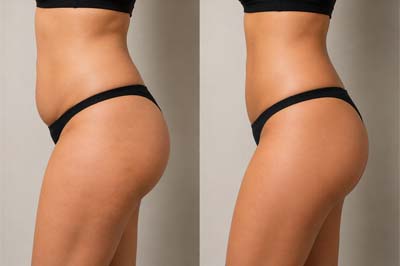
VASER lipo
Precision ultrasound-assisted liposuction that targets and removes fat cells with minimal damage, delivering smoother body contours and enhancing muscle definition.

Breast lift
Repositions and reshapes sagging breasts for a more youthful, lifted appearance without altering breast volume, restoring perkiness and contour.
Consultation
Meet the skilled professionals behind our transformative treatments. Each of our specialist doctors brings extensive experience and a commitment to excellence, ensuring personalized care and exceptional results.

Sameer Karkhanis, MD
Board-Certified Mumbai Plastic Surgeon
Chief Plastic Surgeon & the Director at CCRS is a qualified Aesthetic Plastic and Reconstructive Surgeon. He is Board Certified, with the qualification of DNB Plastic Surgery (Diplomate of National Board). He is an active member of the International Society of Aesthetic Plastic Surgery.


Breast augmentation surgery FAQs
Our dedicated team of professionals provides top-notch surgical services in a modern, comfortable environment. Explore our gallery to see the advanced facilities and compassionate care that set us apart in the field of surgery.
Breast augmentation surgery (augmentation mammoplasty) in Thane is a cosmetic procedure that increases breast size, restores lost volume, and improves breast shape and symmetry using silicone implants or fat transfer. At CCRS Thane, Dr. Sameer Karkhanis tailors every breast enlargement procedure to the patient’s anatomy and personal goals.
Breast implants use silicone prostheses to achieve a predictable, customisable size increase and are suited for moderate to significant enlargement. Fat transfer breast augmentation uses the patient’s own fat — removed via liposuction — and is a less invasive option, though significant size increase is limited. Dr. Sameer Karkhanis at CCRS Thane may also combine both techniques for optimal results.
No. Breast implants do not increase the risk of breast cancer. Studies confirm they do not delay cancer detection, and women with implants have similar cancer remission rates to those without. Patients should continue routine mammogram screening as advised by their doctor.
Silicone breast implant results typically last 5–6 years, though many implants remain stable for longer. A replacement or revision procedure may be considered over time depending on the implant condition. Fat transfer results are long-lasting where the transferred fat cells survive, with final outcomes stabilising over 3–6 months.
Potential risks of breast augmentation surgery include capsular contracture, implant rupture or leakage, infection, temporary or permanent changes in nipple sensation, implant displacement, wrinkling or rippling (more common with saline implants), and scarring. Rare risks include Breast Implant Illness (BII) and anaplastic large-cell lymphoma (ALCL), linked specifically to textured implants. Dr. Sameer Karkhanis at CCRS Thane discusses all risks thoroughly during the pre-operative consultation.
You can consult CCRS — Thane’s leading cosmetic surgery centre — for breast augmentation surgery in Thane. Dr. Sameer Karkhanis will assess your goals, recommend the right breast enlargement approach, and provide a transparent breast augmentation surgery cost estimate. Book a consultation at cosmeticssurgerycentre.com.
Yes, if a silicone implant ruptures, it should be replaced within a few months. Silicone leaks can cause scar tissue or lumps, which may resemble breast tumors.
Cup size depends on several factors, including your natural breast tissue, chest width, and implant size. There’s no guaranteed correlation between implant size and cup size since measurements vary by person.
It’s possible to experience temporary or permanent sensation loss, especially with larger implants. However, most women see sensation return within 3-6 months, particularly with implants placed below the muscle.
The approximate breast augmentation surgery cost in Thane at CCRS starts from INR 1,50,000 (excluding GST). Final cost depends on the type of procedure, silicone implants or fat transfer implant selection, and individual patient requirements. A consultation with Dr. Sameer Karkhanis is recommended for a personalised cost estimate.
Dr. Sameer Karkhanis at CCRS is a Board-Certified Plastic and Reconstructive Surgeon with experience performing breast augmentation surgery in Thane. He holds MS (General Surgery) and DNB (Plastic Surgery) qualifications and is a member of the International Society of Aesthetic Plastic Surgery (ISAPS).
Most patients can return to non-physical work within 48–72 hours after breast augmentation surgery at CCRS Thane. If your role involves heavy lifting or significant arm movement, a recovery period of up to 6 weeks is recommended before resuming those activities.
Yes, most women can breastfeed after breast augmentation surgery. Incisions made in the inframammary fold or through the armpit typically do not interfere with milk production. Peri-areolar incisions carry a slightly higher risk of affecting breastfeeding. Dr. Sameer Karkhanis discusses incision options and breastfeeding considerations during the consultation at CCRS Thane.
Yes. Breast augmentation surgery at CCRS Thane can be combined with a breast lift (mastopexy) to address sagging while adding volume, or with other body contouring procedures. Dr. Sameer Karkhanis will recommend the most appropriate combination based on your anatomy and desired outcome.
There’s a chance you may need future surgeries due to implant complications, such as ruptures or capsular contracture. Additionally, implants may require adjustments over time as your body ages.
High-profile implants aren’t a recommended fix for sagging breasts. For true sagging (ptosis), a breast lift is the best option, potentially combined with moderate-profile implants if more volume is desired.
Yes, this can happen if capsular contracture (hardened scar tissue around the implant) develops. Early treatment options include massaging, but more severe cases might require surgery to release the scar tissue.
Implants alone won’t guarantee more cleavage. Cleavage depends largely on your breast shape, size, and chest width. Larger implants can sometimes push breasts outward, reducing the appearance of cleavage.